
Babel by R. F. Kuang: A Review

Kui Kabala
Fri, 31 October 2025
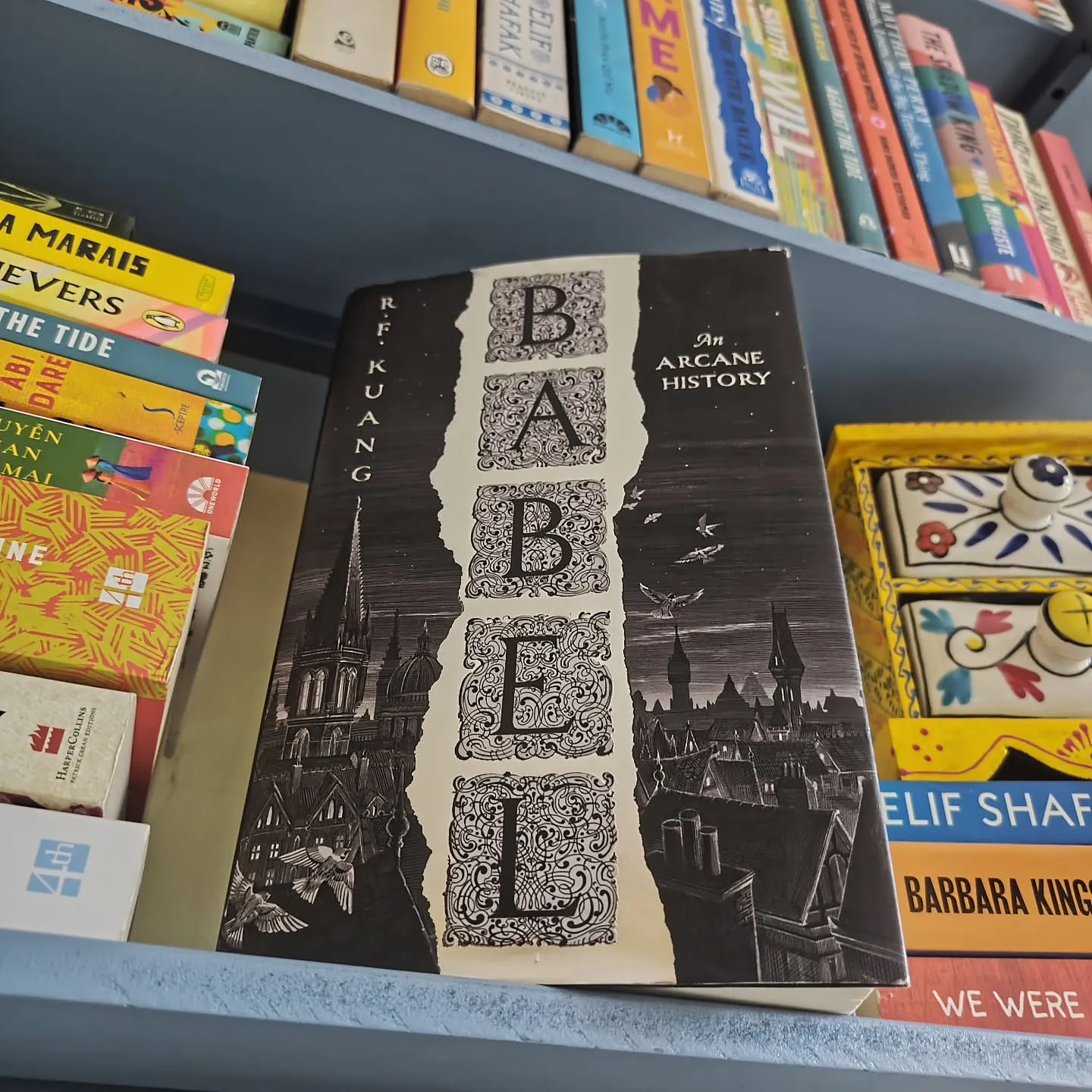
It’s the 1800s in Oxford, England, the height of the British Empire, and the brightest linguistic minds from around the world are gathered at the prestigious Royal Institute of Translation, known simply as Babel. These young scholars are handpicked, educated, and nurtured by the Crown, not out of benevolence, but utility: their mastery of languages fuels the magical silver bars that power England’s industry, trade, and global domination.
The magic of Babel lies in translation. Each engraved bar harnesses the untranslatable differences between words in different languages to generate power, quite literally. It’s a dazzling metaphor for how empires extract, manipulate, and profit from the knowledge and labour of the colonised.
The foreign students of Babel, drawn from Asia, Africa, and the Caribbean, are celebrated for their brilliance, yet constantly reminded of their “otherness.” Their accents, skin colour, and customs mark them as outsiders in the very empire they sustain. Small humiliations pepper their daily lives, quiet reminders that acceptance comes only through usefulness.
But as the story unfolds, it becomes clear that England’s thirst for supremacy is boundless, and that even the brightest minds can be sacrificed in service of empire. When the scholars finally confront how deeply their gifts are weaponised against their own people, the reckoning that follows brings the entire nation to its knees.
A Love Letter to Language and a Condemnation of Power
R. F. Kuang’s Babel is an extraordinary ode to language and linguistics. She captures not only the beauty of words and etymology but also their politics; how language shapes identity, hierarchy, and belonging. The book immerses readers in 19th-century Oxford with incredible detail, from the cobblestone streets and Latin lectures to the heavy silences of exclusion.
Kuang’s research is staggering. Real historical events and attitudes are woven seamlessly into the fiction, making the novel feel both timeless and painfully contemporary. For readers from former colonies still wrestling with the aftershocks of imperial rule, Babel is more than just a story; it’s a mirror.
As someone from a former British colony still dealing with the lasting effects of colonial rule and the suppression of self-determination, I found parts of it deeply emotional, and triggering.
Kuang doesn’t flinch from exposing the brutality that underpinned empire. Beneath the veneer of academic curiosity and progress lies exploitation, racism, and moral hypocrisy. The Crown’s “civilising mission” is revealed as a convenient lie- a way to justify theft and domination.
Empire’s Hypocrisy Laid Bare
What struck me most was how clearly the book dismantles the myth of imperial benevolence. The paternalistic sanctimony is nauseating — the idea that empire was a noble, religious endeavour, when in truth it thrived on violence and greed.
When Ramy, one of the students from Calcutta, says that he lives in a country still struggling with whether to consider him human or not, my heart broke. Kuang captures that quiet despair so precisely; the exhaustion of having to prove your humanity in a world built on your dehumanisation.
And when the characters come to the painful realisation that “violence is the only thing that brings the coloniser to the table,” it broke me all over again. Their choices are grim, their hope fragile. I had to remind myself that we are now in the 21st century, that things are better.
But then again, reading from Africa, I couldn’t help but think of how neo-colonialism continues to shape our economies, our politics, and even our languages. The parallels are haunting.
Babel is not a light read. It is dense, political, and emotionally heavy. But it’s also brilliant. It challenges readers to think critically about history, privilege, and the lingering structures of empire that still govern our world.
I am in awe of R. F. Kuang’s grasp of language, her courage in tackling imperialism head-on, and her ability to make us care deeply for characters who are both scholars and symbols of resistance.
“The world runs on translation,” Kuang writes, and by the end of Babel, you understand that she means far more than words.
This book made me angry, heartbroken, and inspired- sometimes all at once. It’s a powerful, thought-provoking masterpiece that will stay with me for a long time to come.