
Between Two Kingdoms: A Review

Kui Kabala
Fri, 10 October 2025
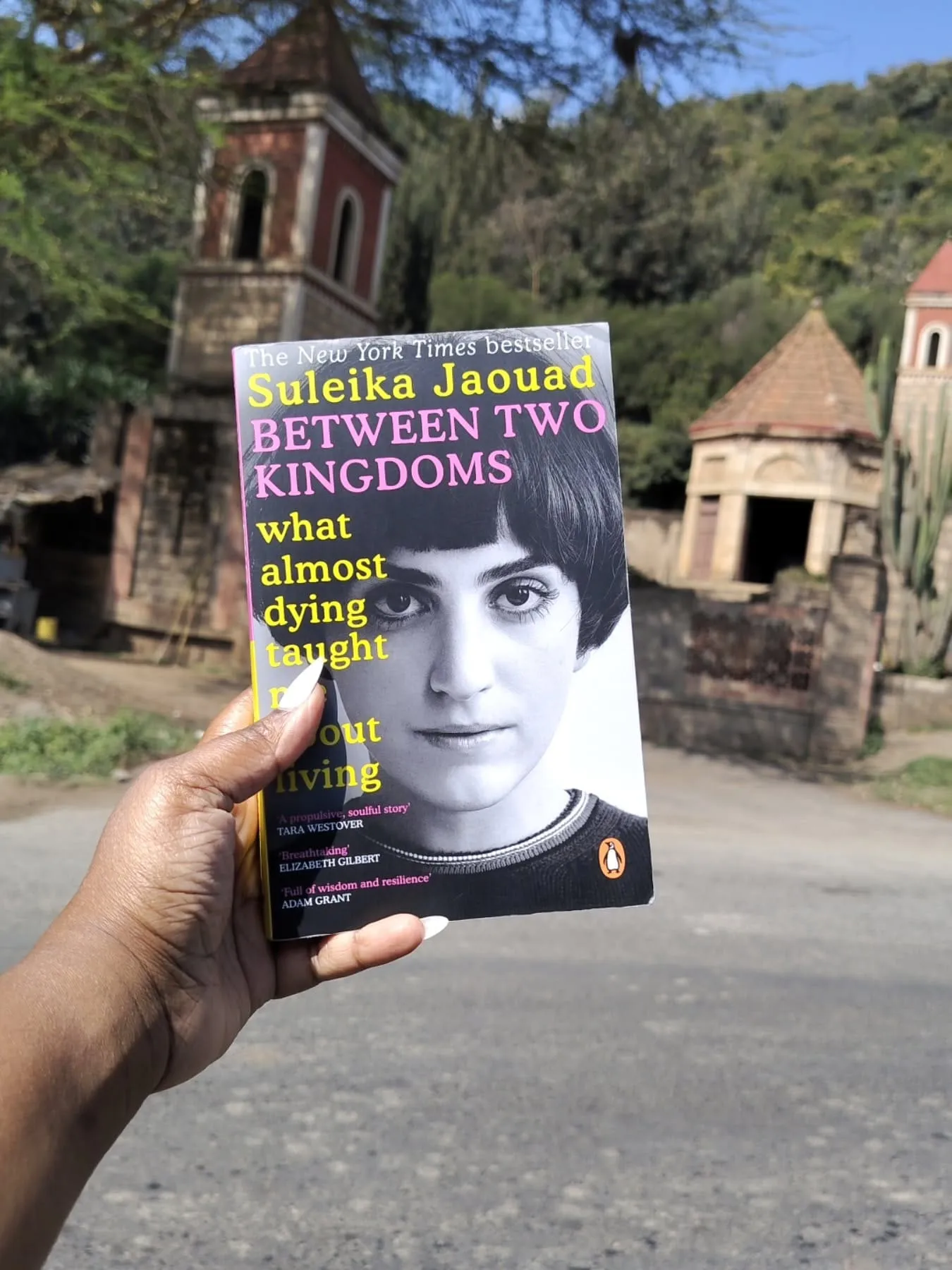
In 1978, Susan Sontag wrote in Illness as a Metaphor that ‘everyone who is born holds dual citizenship in the kingdom of the well and in the kingdom of the sick.’ At just 22, Suleika Jaouad is diagnosed with acute myeloid leukimia, and just under a decade later, borrows from Sontag’s observation to title her memoir.
Freshly graduated from college with the career goal of becoming a war correspondent, Suleika is newly in love, living in Paris, with the world at her feet. She’s traveled the world, including to her paternal homeland of Tunisia, and future is bright and full of promise.
At first, the extreme exhaustion and listlessness she starts experiencing is chalked up to being overworked, and all the different doctors she visits treat her myriad symptoms in isolation, until she is finally flown home to New York and the devastating diagnosis is delivered: cancer, with a 35 per cent chance of survival.
‘For the person facing death, mourning begins in the present tense, in a series of private, pre-emptive goodbyes that take place long before the body’s last breathe,’ Suleika writes, and her writing takes us on the journey from a carefree young woman to a deathly ill patient, who has to face her mortality every day. The journey itself is brutal, and Suleika shares the good, the painful, and the devastating with candour. One particularly vivid description is now inscribed in my brain: “The chemo was burning away the mucous membranes that lined my mouth, my throat and gastrointestinal tract…I was vomiting chunks of charred flesh into the bucket next to my bed.”
Suleika details the ‘collateral damage of illness, and the toll fighting cancer takes on her loved ones, especially her parents and long-term boyfriend, Will. From a whirlwind Parisian romance to a caregiver on the front-lines of a brutal disease, Will is a central character in Suleika’s story, all the way to the end. A bone marrow transplant from her brother Adam eventually puts Suleika in remission, though it does take about 4 years.
Suleika finds comfort in journaling during her illness, which offers a modicum of control in her life. The journaling leads to an Emmy award winning column in the New York times, with strangers and fellow survivors reaching out through letters that tide her over in a difficult period. Finally disease free but still in recovery, she sets out across the country, as a newly minted driver, to meet the correspondents that resonated with her the most.
‘When you survive something that was thought to be unsurvivable, the obvious is gained. You have your life-you have time. But it’s only when you get there that you realise your survival has come at a cost.”
A kaleidoscope of characters, from friends made and lost in the cancer wards, all the way to the interactions she has with strangers on her road trip, are sprinkled all through the book, heart-warmingly so. Losing her friends is an added layer not just of grief but of the reality that a cancer patient is continuously straddling the line between life and death.
‘Grief is a ghost that visits without warning. It comes in the night and rips you from your sleep. It fills your chest with shards of glass. It interrupts you mid-laugh when you’re at a party, chastising that, just for a moment, you’ve forgotten. It haunts you until it becomes a part of you, shadowing you breath for breath.’
In the end, Suleika chose to face life as fearlessly as she can, conscious of the gift of a second chance, and not ‘being a martyr to the worst thing that’s ever happened to me’. A true testament to overcoming grief.