
Inside the African Literary Renaissance with Soma Nami’s Muthoni Muiruri
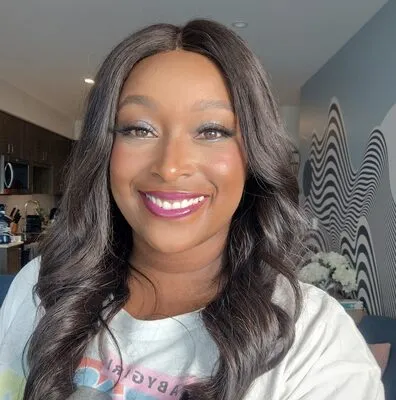
Kui Kabala
Thu, 11 December 2025

In Nairobi today, it is nearly impossible to talk about African literature without invoking one name: Muthoni Muiruri. Bookseller, curator, literary activist, and founder of Soma Nami Books and the African Book Fair, she has become one of the continent’s most influential champions for African storytelling.
When Soma Nami opened its doors three years ago, its philosophy turned the traditional African bookstore model on its head. Most bookstores on the continent have a shelf, sometimes literally a corner, labelled “African Literature/Africana.”
Muthoni remembers walking into such shops and feeling the weight of that othering. “I kept asking myself: Why are African books the ones hidden in a corner- in Africa?”
Soma Nami rejected that model entirely. Their store is African by default. No Africana shelf. No corner. Just books, African books, taking centre stage where they belong.
When they launched, customers were shocked. “People would walk in and ask, ‘So… where are your other books?’” Muthoni laughs. “For a year and a half, that was the most common question.”
Today? No one asks. The shift is cultural, intentional, and reader-led.
Self-Publishing and a New Kind of Literary Freedom
One of the biggest changes in Kenya’s literary landscape currently, Muthoni explains, is the sheer volume of self-published Kenyan writers. Traditional publishing has historically excluded many African writers: the high cost, the gatekeeping, the limited slots for African authors in international lists, the textbook-driven local industry. But Kenyan writers are no longer waiting for permission.
“Writers are taking the power back,” Muthoni says. “They’re saying, ‘I have something to say, and I will find a way to say it.’”
And they are not just writing literary fiction. They are writing across every genre, from science fiction and political commentary to children’s literature and suspense thrillers. The variety is staggeringly beautiful.
The Journey to 54
Perhaps one of Soma Nami’s most impressive achievements is their “Journey to 54” shelves, which include fiction and non-fiction from all 54 African countries.
Some books are familiar: Nigeria’s booming selection of literary fiction, South Africa’s political fiction, Ghanaian memoirs and Kenyan short story compilations. Others are rare finds, from countries such as Cape Verde, Central African Republic or Togo.
Readers often pick up books from countries they had never considered before.
“Book club members kept saying, ‘I would never have picked this up on my own’”, Muthoni notes. This is one of Soma Nami’s greatest contributions: broadening Africa’s imagination of itself.
African literature festivals have multiplied in recent years, and the Kenyan calendar currently has, among others, Macondo Literary Festival, NBO Litfest, and now the African Book Fair, founded by Muthoni.
But while many festivals platform international stars, the African Book Fair was created for a different purpose.
“We were tired of watching other writers around the world being invited to talk about their work,” Muthoni says. “Where was the platform for Kenyan writers?”
The Book Fair is a celebration of Kenyan and African books first, organized regionally so readers can experience the full breadth of the continent’s literary voices.
The 2024 and 2025 editions featured powerful conversations, sold-out sessions, and a rare intimacy between readers and authors.
Muthoni describes moderating Booker Prize winning novelist Bernadine Evaristo’s session at the 2024 edition of the NBO Litfest as one of the highlights of her career.
“We Don’t Read”? The Myth Has Finally Crumbled
Booksellers have been told for decades that Kenyans don’t read. That Africans don’t buy books. That African writers can’t succeed at home.
Soma Nami’s growth proves the opposite. A second store opened in under three years, selling almost exclusively African books.
“That’s not because of me,” Muthoni emphasizes. “It’s the readers. The readers did that.”
Walk into the store on any weekend and you will find people browsing, buying, discussing, and recommending African stories with pride.
At the time of the interview (late 2024), Muthoni looked back on the year’s most notable moments. From the release of Aiwanose Odafen’s We Were Girls Once (which Muthoni blurbed) to the 100 notable African books of the year on Brittle Paper’s highly curated list, 2024 was full of literary magic.
A few notable moments:
- Masobe Books continued reshaping African commercial fiction
- Somali-British author Nadifa Mohamed ’s “ Bald Dandelions With Their Wishes Blown Clean Off ”, an anthology featuring several Kenya authors, launched in Nairobi, alongside the Billy Kahora curated anthology Let Us Conspire and Other Stories
- Tomi Adeyemi completed her long-awaited Legacy of Orisha fantasy trilogy with Children of Anguish and Anarchy
- Kenya’s own Dennis Mugaa released Portraits Underwater and Other Stories.
- How to Build a Library, a documentary on Nairobi’s public libraries was selected for Sundance.
Africa is writing widely, wildly, brilliantly.

Five African Books Muthoni Believes Everyone Should Read
These weren’t easy for her to choose—she joked that her mind went blank the moment she was asked—but these five are close to her heart:
1. Kintu (Jennifer Nansubuga Makumbi, Uganda)
A masterful, centuries-spanning Ugandan epic that refuses to center colonialism, focusing instead on family, culture, and African cosmology.
2. A Broken People’s Playlist (Chimeka Garricks, Nigeria)
Muthoni’s all-time favorite short story collection. Emotional, musical, unforgettable.
3. Beneath the Lion’s Gaze (Maaza Mengiste, Ethiopia)
A stunning family saga set against Ethiopia’s political upheaval of the 1970s.
4. Havoc of Choice (Wanjiru Koinange, Kenya)
A powerful, intimate rendering of Kenya’s 2007/8 post-election violence told through one family’s unraveling.
5. We Were Girls Once (Aiwanose Odafen, Nigeria)
A moving portrait of intergenerational female friendship, love, and becoming. Muthoni blurbed the West African edition.
Muthoni sees the future of African literature in collaboration: across borders, across bookstores, across publishers. The barriers to distributing African books within Africa remain enormous: logistics, taxes, cost—but she’s already building networks that make it possible to order books from Nigeria and receive them in Nairobi within days.
African literature is in a new, confident era that is bold, experimental and unashamedly diverse. Writers are no longer waiting to be discovered, readers are no longer apologizing for loving their own stories and bookstores are no longer putting Africa on a lonely shelf.
We are here, reading each other loudly. We are the main characters now. Watch the full interview below.