
Inside The Lion’s Den with Dr. Iris Mwanza

Kui Kabala
Thu, 13 November 2025
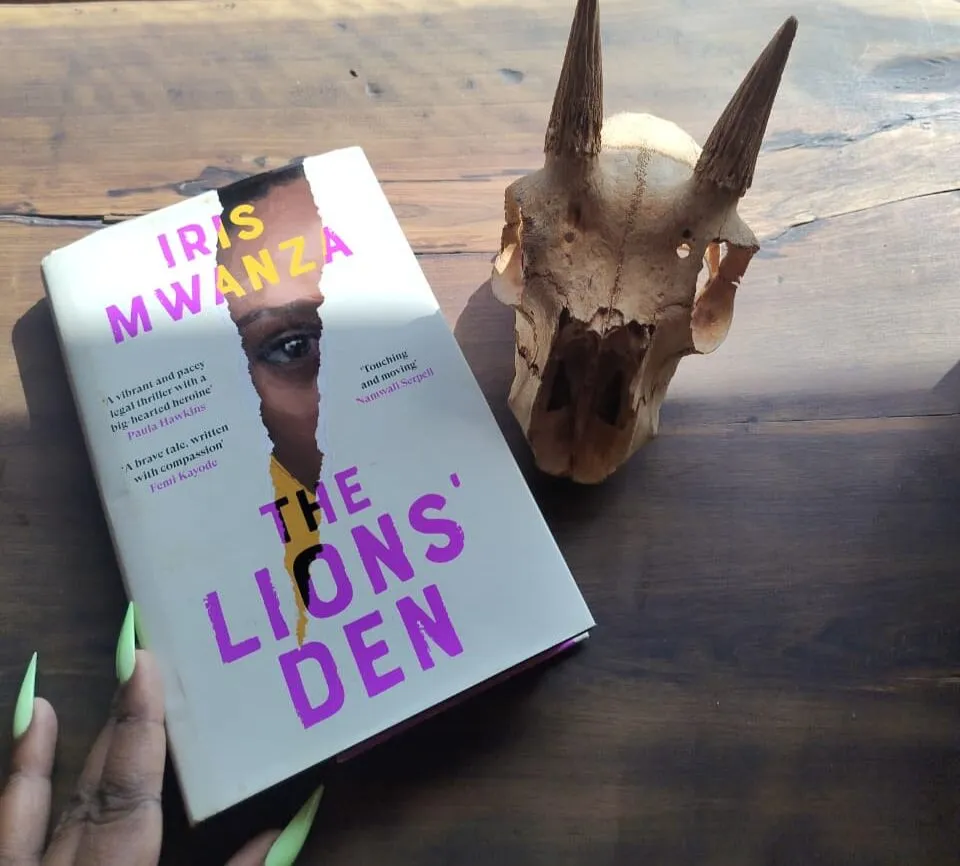
“You have to be a little bit crazy to make a difference sometimes.”
That’s how Dr. Iris Mwanza, Zambian author of The Lions’ Den, describes her protagonist Grace Zulu — and, perhaps, herself too. In the first episode of the second season of Nairobi Book Love, The Podcast, we had the immense pleasure of sitting down with Dr. Iris Mwanza, who joined us during the Kenyan stop of her continental book tour to discuss her gripping debut: a legal thriller that cuts deep into questions of justice, identity, and the human cost of prejudice.
Set in 1991 Zambia, The Lion’s Den follows Grace Zulu, a young, idealistic corporate lawyer who takes on a pro bono case defending Willbess “Bessie” Winga, a man imprisoned for “crimes against the order of nature.” What begins as a simple human rights case quickly spirals into a dangerous quest for justice, one that forces Grace to confront not only corruption and systemic discrimination but also her own moral compass.
The book’s premise may sound like fiction, but its foundations are frighteningly real.
“The law that criminalizes same-sex relations is a colonial law. It’s still on the books today, and in some countries, the penalties are even harsher than they were decades ago. We’re going backwards instead of forward,” Iris explains.
It’s a reminder that the ghosts of colonialism continue to shape African legal systems, and that the struggle for equality is far from over.
The Birth of Grace Zulu
Grace Zulu is many things: young, brilliant, stubborn, and, above all, human. Through her, Iris paints a portrait of a woman learning that the law, like life, is rarely black and white.
“You leave law school thinking you have all the tools to change the world,” Iris reflects. “Then reality hits. You realize the systems are broken and sometimes even the law itself is unjust.”
While Grace’s story is fictional, her experiences are drawn from real life. Iris, who is herself a lawyer with a PhD, channels her early career lessons into Grace’s journey: navigating sexism, classism, and the loneliness of being a young woman determined to make a difference in a patriarchal society.
Shared Histories, Shared Struggles
As an African reader, it’s hard not to see yourself in The Lion’s Den. Franco and TPOK Jazz Band plays in the background of a shebeen; characters in the book are eating ugali/nshima; the languages echo across borders. Reading it feels like leafing through a shared African memory.
“Even driving through Nairobi,” Iris laughed during our chat, “feels so familiar. The roads, the trees, the energy — it’s home.”
But familiarity also extends to the darker realities. The book explores the intersections of faith, law, and culture, especially in how colonial Christianity often invalidated indigenous spirituality. Grace, a Catholic with a logical mind, questions why belief in the Holy Spirit is celebrated, while ancestral belief is dismissed as “pagan.”
“That’s part of our colonial legacy,” Iris says. “We were taught to reject our own spirituality as inferior. Grace’s questioning is part of reclaiming that intellectual and cultural autonomy.”
Patriarchy, Power, and the Price of Defiance
One of the most striking dynamics in The Lion’s Den is Grace’s fraught relationship with her mother, a woman hardened by loss, poverty, and societal pressure. Her mother’s attempts to marry her off to the local chief are both an act of desperation and betrayal. Iris handles this with nuance. “The patriarchy isn’t only upheld by men. It’s a system that women are often forced to perpetuate to survive. Grace’s mother believes she’s protecting her daughter, but in doing so, she becomes part of the machinery that oppresses her.”
Grace’s defiance, through her refusal to be married off, her insistence on education and independence, is both her salvation and her punishment. She pays the price for wanting more.
The Meaning of “The Lion’s Den”
The title itself invites multiple interpretations. Is the lion’s den the prison? The courtroom? Society itself? Iris smiles when asked. “I’ve loved hearing people’s interpretations, and they’re all right, in a way. The lion’s den can be any space where you’re forced to confront power and injustice. And sometimes, it’s within ourselves.”
Rewriting the African Narrative
What makes The Lion’s Den stand out is how it reclaims genre. African fiction is too often pigeonholed into trauma or folklore. Iris’ book proves that African stories can be thrilling, layered, and universal, while still deeply political.
“It’s always such a win when you pick up an African book and you love it,” I told her during our chat. “And when it’s not the stereotypical genre, that’s even better.”
Iris agrees. “We don’t have enough thrillers written by Africans, set in Africa. But our lives- our cities, our histories, are full of drama and intrigue. Why shouldn’t we write thrillers too?”
Set during the final years of President Kenneth Kaunda’s rule, the novel doesn’t shy away from political critique. Iris acknowledges the achievements of Zambia’s first president, colourfully illustrated in the book, but also insists on accountability. “We can recognize the good, from education to independence, without erasing the failures. But if we pretend, they didn’t happen, we can’t do better.”
It’s a lesson that resonates far beyond Zambia’s borders.
At its core, The Lion’s Den is about courage, the kind of courage it takes to stand up for what’s right, even when the cost is high. Grace’s fight for justice is fictional, but the struggles she faces, from misogyny, homophobia, corruption and faith, are painfully real.
“The world needs people like Grace,” Iris says softly. “People who are a little bit crazy. People who refuse to look away.”
About the Author
Iris Mwanza is a Zambian-American writer. who has worked as a corporate lawyer in both Zambia and the US. Mwanza holds law degrees from Cornell University and the University of Zambia, and an MA and PhD in International Relations from Johns Hopkins School of Advanced International Studies. The Lions’ Den is her first novel.