
Je, Huu Ni Ungwana? A final conversation with a national broadcasting legend whose voice held a nation.

Kui Kabala
Mon, 26 January 2026
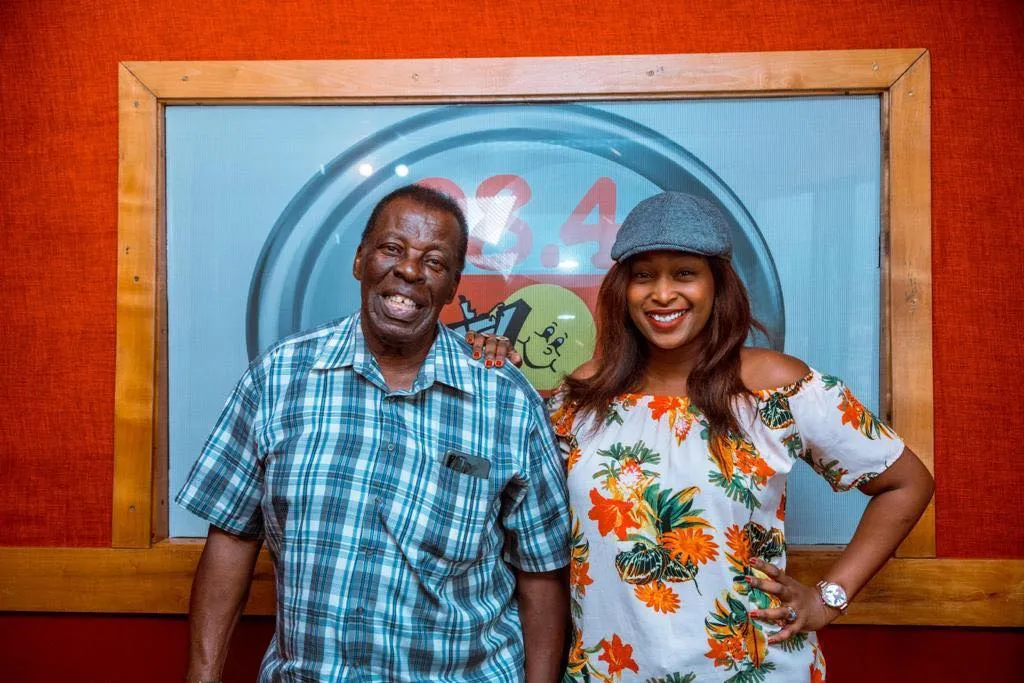
We are seated in Leonard Mambo Mbotela’s living room, tea steaming gently between us, the table dotted with mahamri. The atmosphere is warm, familiar and unmistakably coastal. Hospitality, after all, tells its own story. And from the first bite, it is clear that this conversation will move easily between memory, culture, and history.
Mbotela welcomes us into his home the way he has welcomed Kenya into its living rooms for nearly six decades, with his signature warmth, and with a voice that instantly commands trust.
Mzee would pass on a short while later, on the 7th of February 2025, at the age of 85, plunging the country into deep mourning. He was an unmistakable broadcasting icon, whose career was intertwined with our national history, as he bore witness, via the screen and microphone, to some of the most significant events of the 60s, 70s, 80s and beyond. In 2019, I had the pleasure of interviewing Mbotela on my show, T he World Groove, and later having him on stage when I was hosting Mbilia Bel and Kanda Bongo Man for The Koroga Festival. I cherish those memories deeply
For now, we are here to talk about Je, Huu Ni Ungwana?, his memoir, named after the legendary radio and television programme that has been on air since 1966. For many Kenyans, Je, Huu Ni Ungwana? is not just a show; it is a companion, a moral compass, and a weekly reminder of civility in public life.
An Iconic Show is Born
Je, Huu Ni Ungwana? began not in a studio, but in a moment of public embarrassment.
Fresh from joining the then Voice of Kenya (now Kenya Broadcasting Corporation) in 1964, Leonard Mambo Mbotela and his colleagues were invited for lunch at Nairobi’s Panafric Hotel. One of them loudly summoned service instead of waiting patiently, an act that drew disapproval from fellow diners, including senior government officials.
That small but powerful moment sparked an idea: a programme about etiquette, dignity, and gentility. When Mbotela shared the incident with the Controller of Radio Programmes, the response was simple: ‘ Create the programme’.
He did. Fifteen minutes at first. Then thirty. Then a lifetime. Upon his eventual retirement, the national broadcaster gave him carte blanche to continue with the show until he could no longer do it, and he did so until his passing, an unprecedented 58 years.
Turning a Voice into a Book
The idea to turn the programme into a book came from the late writer and publisher Ken Walibora, a devoted listener who believed Mbotela’s stories deserved permanence.
What followed was a process of memory and collaboration: weekly meetings, long conversations, and the careful work of shaping lived history into written word. Walibora would not live to see the book published, but his imprint is everywhere in it. Mzee speaks fondly of his departed friend, who pushed him to publish, holding his hand through the entire process.
Je, Huu Ni Ungwana? the book reads exactly as Mbotela speaks: measured, vivid, deeply humane. You don’t just read it; you can hear his gravelly baritone in every word.

Leonard Mbotela with Mzee Jomo Kenyatta
The Night Kenya Changed: August 1982
One of the book’s most arresting chapters recounts the attempted coup of August 1982.
Mbotela was asleep in his government quarters when armed soldiers knocked on his window in the early hours of the morning. He was taken to Broadcasting House—chosen precisely because his voice was trusted. If he announced a new government, the nation would believe it.
What followed is almost surreal: looted shops, soldiers fleeing mid-announcement, Mbotela left alone in a studio playing records and praying quietly for his life.
Later, after loyalist troops had thwarted the attempted coup, he was court-martialled. The book details how he was accused of collusion with the soldiers who attempted the coup, a frightening encounter in martial court, where a guilty verdict would have brought life altering consequences. Thankfully, he was acquitted.
It is a moment that reads like fiction, but every word is true.
Bearing Witness to a Nation
Leonard Mambo Mbotela’s life places him at the centre of Kenya’s most defining moments.
He witnessed the assassination of Tom Mboya in 1969, walking past the infamous chemist on Government Road moments after the gunshots rang out.
He broadcast live from Kisumu during one of the most volatile presidential visits in the country’s history, when then President Jomo Kenyatta and former Vice President Jaramogi Oginga Odinga’s intense conflicts came to a head.
He narrated Jamhuri celebrations, national triumphs, and national grief, often as the sole commentator Kenyans heard.
Later, he joined the Presidential Press Unit, travelling extensively with President Daniel arap Moi, becoming not just a broadcaster but a chronicler of statehood itself.

Leonard On Air
Family, Memory, and Belonging
Beyond politics and broadcasting, Je, Huu Ni Ungwana? is also a deeply personal book.
Mbotela traces his family history through slavery, migration, and settlement, from Malawi to Coastal Kenya. He speaks tenderly of his parents, of being born in Mombasa in 1940, and of carrying a name whose roots many misunderstand.
He writes of Mbotela Estate in Nairobi, named after his uncle Tom Mbotela, assassinated in 1952, a trade unionist and Secretary-General of the Kenya African Union.
This is not just one man’s story. It is a family’s story, a community’s story and a nation’s story.
A Life of Calling
As his son Jimmy later reflects, Leonard Mambo Mbotela is exactly who the book says he is.
Every Saturday, without fail, he prepares for Je, Huu Ni Ungwana?. He listens. He records. He reflects. Even in retirement, the calling has never left him.
“This work is in his blood,” Jimmy says. “What you read in the book is who he is.”
Why You Should Read “Je, Huu Ni Ungwana?”
Because it is Kenyan history told without spectacle, but with truth. It reminds us that voices matter and that memory is fragile, which is why we need those who have lived the history to preserve it.
Reading Je, Huu Ni Ungwana? feels like sitting across from Leonard Mambo Mbotela himself, listening as he gently reminds us who we have been, and who we still can be.
Today, listening back to the conversation and reading his words again, the weight of that moment is unmistakable. What remains is not just an interview, but a testament. Rest in peace, Mzee.
Listen to the full interview below.