
Mad Women: True Stories of Defiant Kenyan Women by Joan Thatiah
Kui Kabala
Tue, 7 April 2026
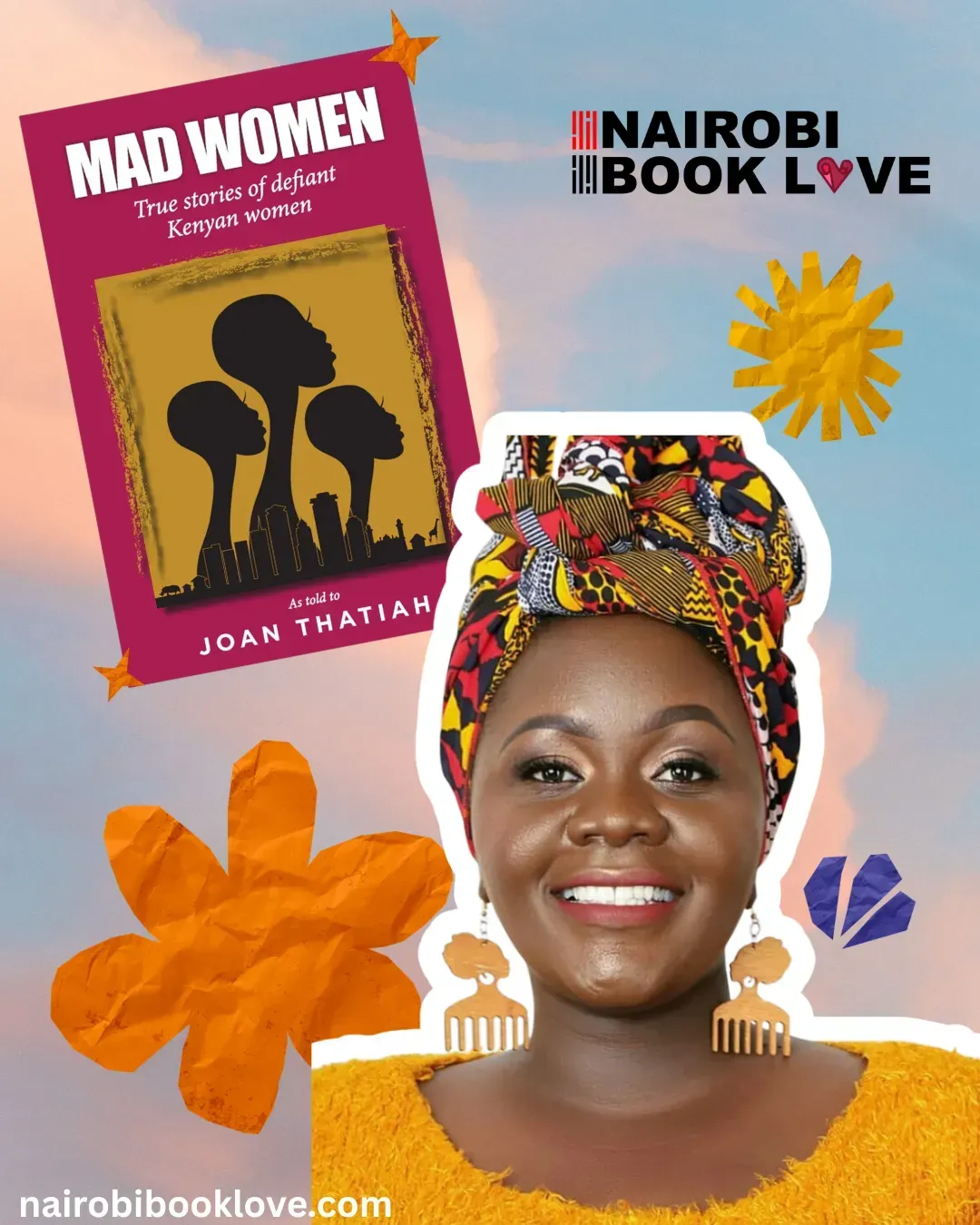
There is something immediately arresting about the title Mad Women. It provokes, unsettles, and invites questions before a single page is turned. In our conversation leading up to the book’s release today, Joan Thatiah makes it clear that this discomfort is entirely intentional.
“In this book, madness is not mental illness. It is what society calls women who step outside expectation and make unpopular decisions.”
From the outset, Mad Women positions itself not as a collection of neat, digestible stories, but as a bold interrogation of the labels placed on women, particularly those who refuse to conform.
Joan reveals that the book emerged from a personal and creative shift.
“I reached a point where I became less interested in perfect stories. I decided to create a space where complicated truths can exist.” This pursuit of complexity defines the work. Rather than presenting women as either virtuous or villainous, Mad Women sits firmly in the grey areas, those that are often ignored in both literature and society. “I wanted to explore the morally complicated spaces. Not just good or bad women but women who make the difficult decisions we rarely discuss openly.”
The emotional weight of the book is anchored in reality. Each story draws from lived experiences shared with the author, giving the collection an intimate, confessional tone.
“Every story in this book is inspired by real life stories told to me directly. I am very interested in the private decisions people make and the emotional consequences that follow.”
This confessional approach continues a narrative style Joan has previously adopted in her wildly popular Confessions series, which prioritizes honesty over comfort.

Picture of Joan Thatiah with Quote: “‘Mad’ is what society call women who step outside expectation and make unpopular decisions”
Reclaiming the “Mad Woman”
Historically, the label of “madness” has been weaponized against women, being used to silence, control, and dismiss. Mad Women challenges this narrative head-on.
“Sometimes, ‘madness’ is just courage that makes other people uncomfortable.”
By reframing madness as a reaction to nonconformity rather than instability, Joan invites readers to interrogate their own biases. “I hope that readers can sit with their discomfort and ask themselves whether these labels are about morality or control.”
There is, of course, the burden of being a ‘good woman’.In Kenyan society—as in many other conservative spaces—the definition of a ‘good woman’ remains narrow and prescriptive.
“A good woman is often defined as patient, forgiving, accommodating and quiet about her suffering,” Joan explains. The consequences for those who step outside these expectations are severe. “They’re misunderstood, isolated and given labels.”
Through her characters, she exposes the cost of these societal constraints as well as the quiet rebellion of those who resist them.
Emotion, Judgment, and Double Standards
One of the most striking themes in Mad Women is the gendered interpretation of emotion. “Anger in men is seen as strength while anger on women is seen as instability,” says Joan.
This double standard becomes a lens through which the reader examines not just the characters, but broader cultural attitudes toward women’s expression of grief, anger, and resistance.
Despite the difficult subject matter, Joan approaches her characters with care and humanity, which means, “treating the characters with dignity even when their choices were questionable… to present them as human beings trying to navigate their circumstances.”
This compassion extends beyond the page. The process of writing the book transformed Joan’s perspective. “It made me more compassionate. When you listen to people’s intimate stories, you realize that most decisions are not as simple as they look.”
Holding Humour and Heaviness Together
Even in its emotional depth, Mad Women is not devoid of levity. Joan leans into the natural rhythms of how people process pain. “Even in pain,” she explains, “people still laugh. Sometimes humour is how people make things easier to carry.”
This balance ensures the stories remain deeply human, layered with both weight and relief.
At its core, Mad Women is an offering to those who have felt judged, labelled, or misunderstood. And perhaps most powerfully, it is a call for empathy. “I hope it encourages less judgment and more curiosity. And I hope women feel less alone in the complicated parts of their lives,” Joan says. And if there was one word she would use to describe the book: “Uncomfortable (in a necessary way).”
That discomfort is the point. Mad Women does not seek to reassure, but asks readers to confront, to question, and to reconsider the stories we tell about women and the labels we assign them. And in doing so, it leaves us with a haunting, clarifying truth:
“Sometimes what we call bad decisions are simply decisions made without good options.”

Picture of Joan Thatiah with Quote: “‘Mad’ is what society call women who step outside expectation and make unpopular decisions”
Mad Women is Joan’s 11th book, and she’s making good on her promise of releasing a book a year. You can listen to our podcast episode from 2020 below-a fantastic conversation that chronicles how she started writing, and her rise to bookish fame.
We leave you with the song that Joan feels captures the mood of the book, ‘ I Am My Mother’s Savage Daughter’ by Sarah Hester Ross. Mad Women: True Stories of Defiant Kenyan Women is available where you buy books.